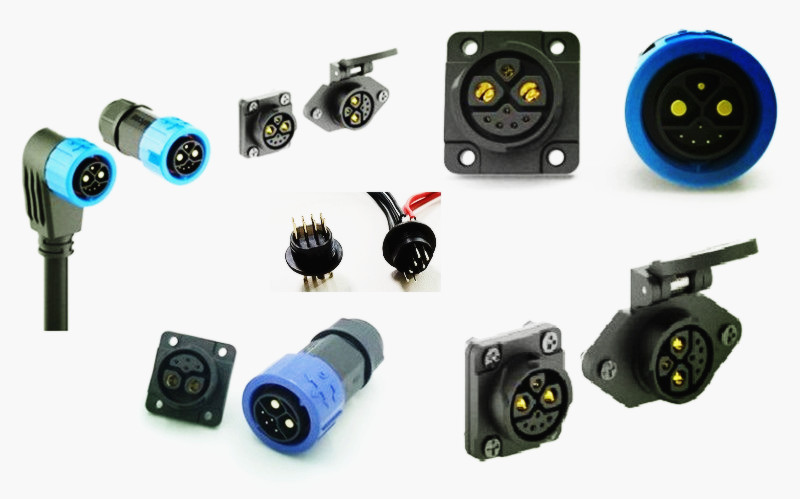
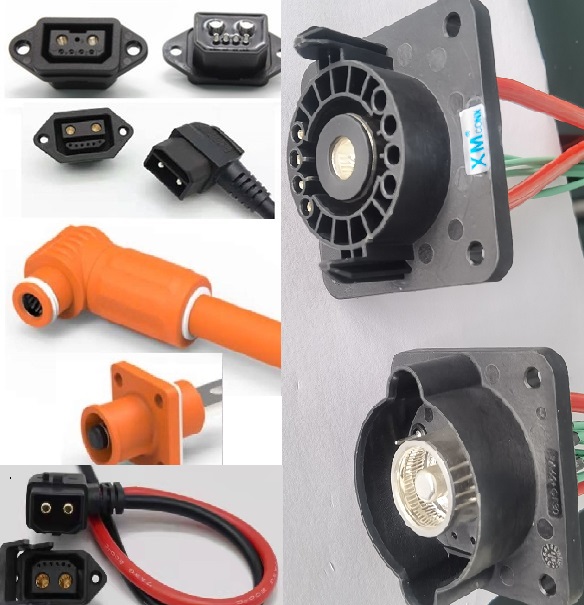
The right hybrid interface depends on where the BMS sits and how the pack is divided. In a typical all-electric vehicle, the battery pack supplies the electric drive and receives energy from the charging system, while control and monitoring signals sit around that main power path. If the BMS is mounted inside the battery pack, a 2+6 connector can act as the pack boundary: two power pins carry main current, and six signal pins carry internal control and monitoring lines to the outside world. If the BMS is outside the pack or inside a separate control box, the connector may need to handle more signal functions or share the interface with a PDU. Pack topology comes first; the connector should follow the architecture. The DM80 is a 2+6 pin battery pack connector with 100A/200A options, a thermoplastic housing, and a UL94V-0 rating for battery pack and new energy automobile battery box use. Those facts make it a practical reference for comparing a hybrid interface against separate power and signal connectors. A thermoplastic housing with UL94V-0 flame-retardant performance is relevant in battery boxes because material behavior matters when space is tight and thermal events are a design concern. The 100A and 200A options give electrical engineers a starting point for main current planning, while the six signal pins give harness engineers a defined path for BMS and control communication. Pinout definitions, wire gauge, voltage, IP rating, plating, and cycle life come from the datasheet and engineering drawing, so request those documents before freezing the harness. Mating connector choice is the next major decision. A complete interface design includes the mating half, terminal system, and cable assembly selected together. Engineers is worth checking panel cutout dimensions, keying orientation, locking style, and service access. They should also check how the connector will be mounted in the battery box and whether the cable bundle needs overmolding, conduit, or a strain-relief bracket. A battery pack connector manufacturer can help by matching the connector to the pack current profile, BMS signal list, expected cable lengths, and assembly sequence. Sharing that information early leads to a connector recommendation that fits the application instead of a generic part number.

 +86-15817275200