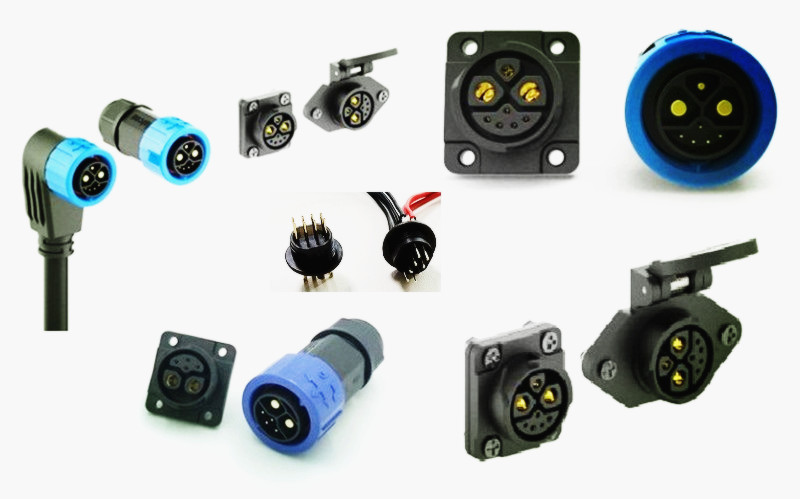
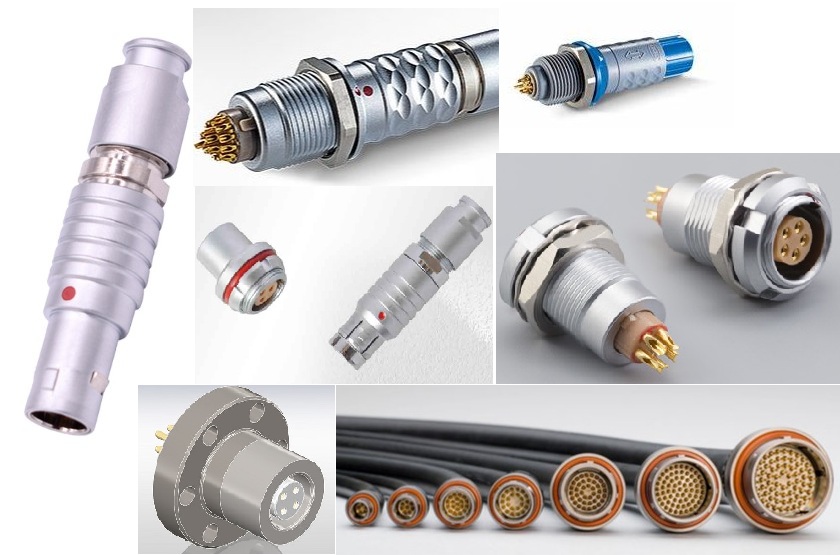
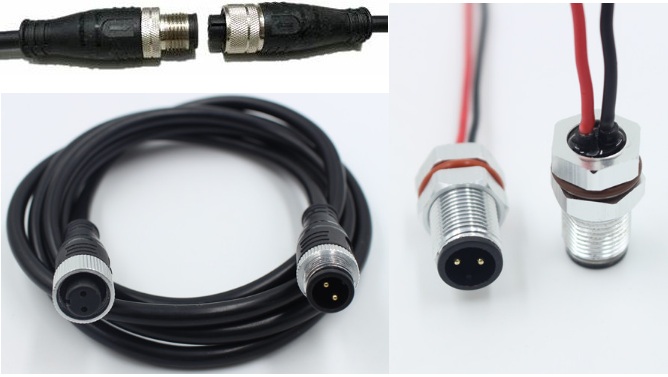
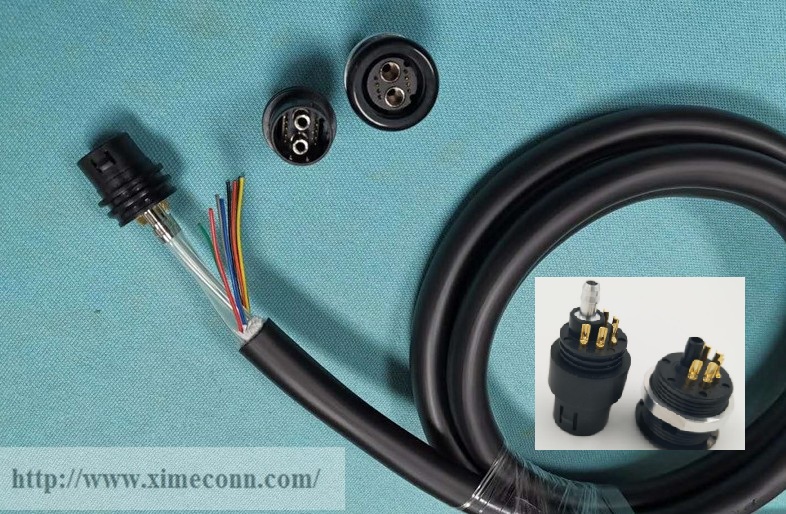
M12 circular connectors solve a cable-to-equipment connection. The round interface and locking collar are the usual visual cues, and the cable enters from the back through a gland, overmold, or backshell. Their job is to make a cable connection repeatable at the outside of a machine, not to close a gap between two PCBs. That is why M12 circular parts appear so often on sensors, actuators, junction boxes, and control cabinets. Mating endurance standards such as IEC 60512-4-1 matter here because the same cable plug may be connected and disconnected many times over the life of the equipment.
1. M12 Circular Interfaces Usually Join Cables to Housings
In the common M12 circular role, a cable-side plug mates with a housing-side receptacle. The cable passes through a gland, overmold, or backshell; the round front end carries contacts in a pattern that aligns with the receptacle. The housing may be a sensor body, a junction box, a control cabinet wall, or a machine panel. The interface is judged by mating geometry, locking method, contact arrangement, and sealing at both the cable entry and the mating face. Some panel receptacles have PCB tails behind the panel, yet the category role remains cable-to-housing: the part a user plugs in is a cable connector. That is why an M12 search phrase often leads to cable assemblies, field-attachable plugs, panel receptacles, and sensor cordsets rather than board-stack parts.
2. Board-to-Board Connectors Usually Join PCB Pairs Inside Assemblies
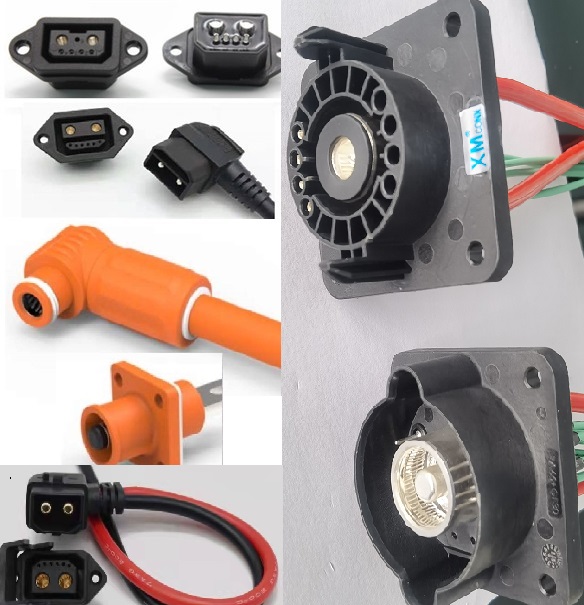
The board-to-board role is internal. Two PCB halves mate directly, and the connector pair provides mechanical alignment, contact normal force, and current paths between boards. A 40A power supply channel and 32 signal pins can sit in the same housing, which is why a part like the s445 reads as a power-and-signal board interconnect. The user does not plug a cable into it during normal operation; assembly technicians mate the boards during build or service. That changes the design questions: stack height, solder joint access, pin retention, and board warpage matter more than cable bend radius or field locking. A board part can be waterproof as an assembly feature while remaining a board-to-board connector; that waterproof wording does not turn it into a circular cable interface.

 +86-15817275200